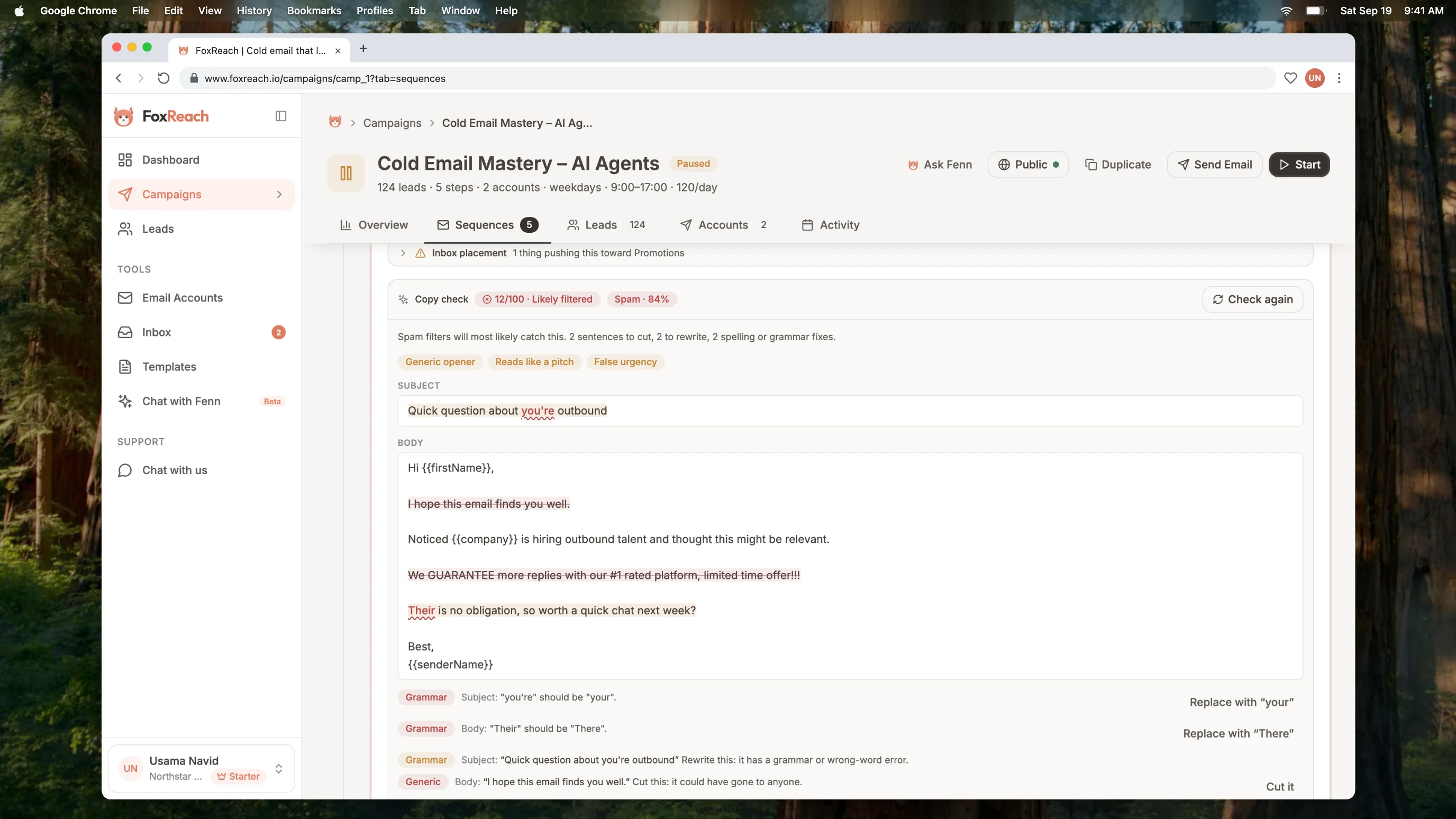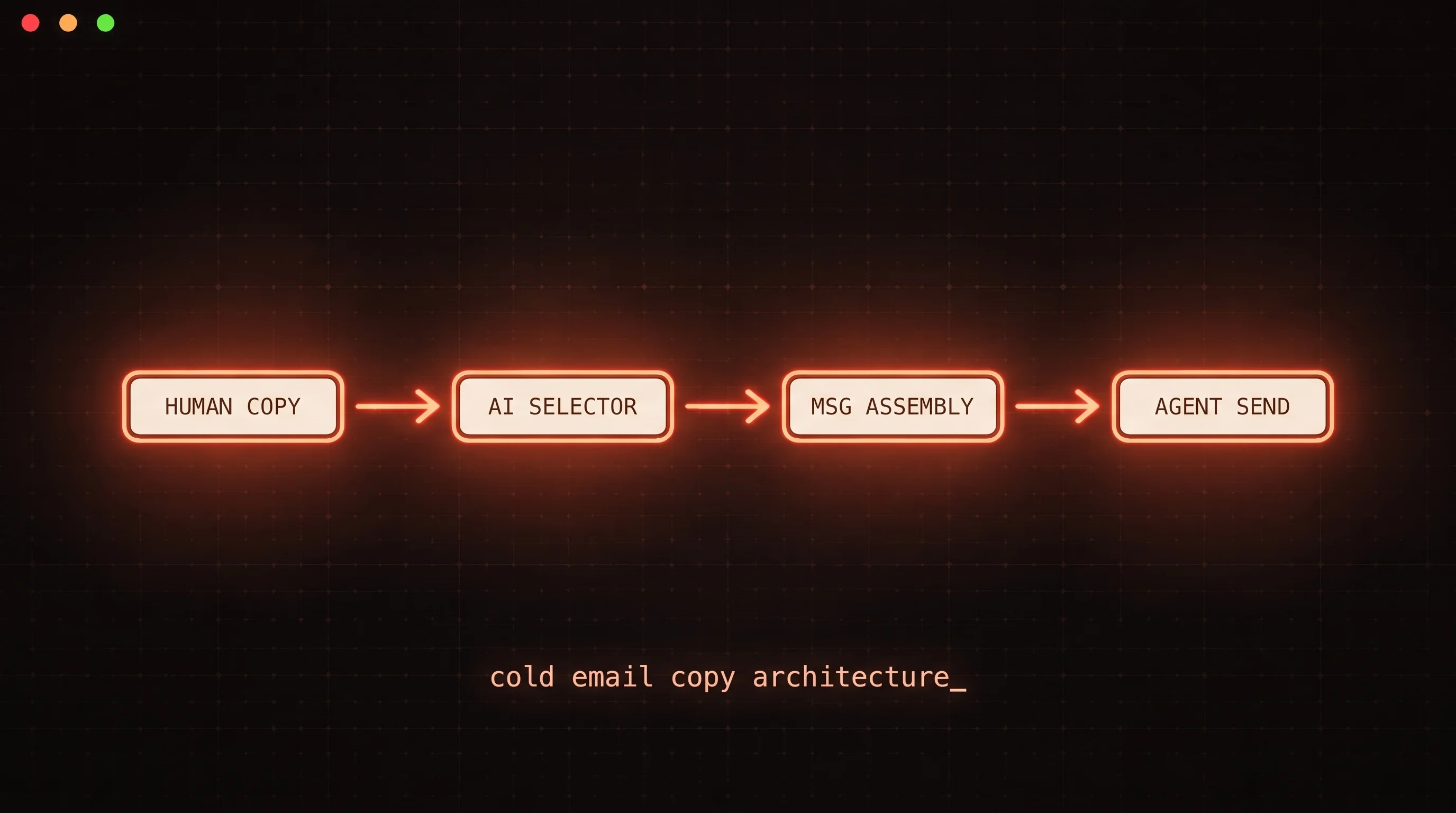
Thai Vo runs outreach for clients on top of FoxReach, driving campaigns from his own AI agents through the SDK and sequences. This case study covers four completed campaigns from his workspace for two of those clients, a construction company and an IT company. Each client ran two campaigns. The data below is shared with permission and comes straight from FoxReach campaign analytics.
| Construction | IT | |
|---|---|---|
| Total leads | 45,398 | 10,758 |
| Emails sent | 76,316 | 17,305 |
| Total replies | 483 | 55 |
| Reply rate (on emails sent) | 0.63% | 0.32% |
| Bounce rate | 9.64% | 12.12% |
| Sending accounts | 26 to 29 | 24 |
| Campaigns | 2, both completed | 2, both completed |
Client 1: construction company
The construction client came to FoxReach with a large, pre-built lead list and a need to reach a significant number of prospects across two campaigns. The audience was primarily procurement decision-makers and project managers in commercial construction. The sending volume required made inbox rotation and sending-limit management essential to protect domain reputation at scale.
FoxReach distributed sends across 26 to 29 connected accounts, with daily limits of 2,600 to 2,900 emails. Both campaigns ran on weekdays during a sending window of 12:00 PM to 4:30 PM AEST, keeping send volume natural and consistent across each day.
Campaign 1: 14 April
The first campaign targeted 34,483 leads across a two-step sequence. Over the course of the campaign, FoxReach sent 56,135 emails in total, accounting for both sequence steps reaching the same lead at different intervals. The campaign ran to full completion across all leads.
| Metric | Value |
|---|---|
| Total leads | 34,483 |
| Emails sent | 56,135 |
| Replies | 333 |
| Bounced | 6,554 |
| Sending accounts | 26 |
| Schedule | Weekdays, 12:00 PM to 4:30 PM AEST |
| Daily send limit | 2,600 per day |
| Status | Completed (100%) |
The campaign generated 333 replies, a reply rate of 0.59% on emails sent, or 0.97% on unique leads contacted. For a large-volume construction audience, this represents genuine engagement from decision-makers who responded to the outreach. Email lists decay at an average rate of 22 to 30 percent per year, meaning a list that has not been refreshed in 12 months can carry a significant portion of stale or invalid addresses before a single email is sent. This is a common starting point for first campaigns and improves with each subsequent list refresh.
Campaign 2: Jun 2
The second campaign ran a tighter, more targeted list of 10,915 leads with a three-step sequence. Sending accounts expanded slightly to 29, allowing a higher daily limit of 2,900 emails. The campaign followed the same weekday sending window as the first.
| Metric | Value |
|---|---|
| Total leads | 10,915 |
| Emails sent | 20,181 |
| Replies | 150 |
| Bounced | 804 |
| Sending accounts | 29 |
| Schedule | Weekdays, 12:00 PM to 4:30 PM AEST |
| Daily send limit | 2,900 per day |
| Status | Completed (100%) |
150 replies from 10,915 leads is a reply rate of 0.74% on unique leads, higher than the first campaign. The more targeted list produced stronger message-market fit, and the bounce count dropped significantly to 804, indicating better list hygiene on the second import. Each campaign builds on the previous one.
Combined results: construction
| Total leads | Emails sent | Reply rate | Bounce rate |
|---|---|---|---|
| 45,398 | 76,316 | 0.63% | 9.64% |
483 replies from 45,398 leads across two completed campaigns, run across 26 to 29 connected accounts from a single FoxReach workspace.
Client 2: IT company
The IT client ran campaigns targeting social media professionals and digital marketing decision-makers in the technology sector. Unlike the construction client, this audience was reached on a three-day-per-week schedule, Monday, Wednesday, and Friday, which aligned with the client's own team availability for handling replies and follow-ups as they came in.
The IT campaigns operated at a smaller scale than construction, with 24 accounts and daily limits of 1,200 to 1,251 emails. The controlled cadence was deliberate: the client wanted reply volume that their sales team could work through without a backlog building up across the week.
Campaign 1: social media, 5 May
The first campaign ran 4,764 leads through a two-step sequence. FoxReach sent 7,777 emails across the campaign, a ratio that reflects the two-step structure and the portion of leads who received both touches.
| Metric | Value |
|---|---|
| Total leads | 4,764 |
| Emails sent | 7,777 |
| Replies | 27 |
| Bounced | 858 |
| Sending accounts | 24 |
| Schedule | Mon / Wed / Fri, 12:00 PM to 4:30 PM AEST |
| Daily send limit | 1,251 per day |
| Status | Completed (100%) |
27 replies from 4,764 leads reflect a reply rate of 0.35% on unique leads. The IT sector tends to have higher list churn than construction, driven by frequent job changes, domain migrations, and email alias updates. Industry data puts annual email list decay at 22 to 30 percent, which compounds quickly on a list that has not been refreshed before sending.
Campaign 2: social media, Jun 2
The second campaign expanded the lead list to 5,994 and maintained the same three-day schedule and account setup. The daily limit was adjusted to 1,200 to keep send velocity consistent across the larger list.
| Metric | Value |
|---|---|
| Total leads | 5,994 |
| Emails sent | 9,528 |
| Replies | 28 |
| Bounced | 1,238 |
| Sending accounts | 24 |
| Schedule | Mon / Wed / Fri, 12:00 PM to 4:30 PM AEST |
| Daily send limit | 1,200 per day |
| Status | Completed (100%) |
28 replies from 5,994 leads gives a reply rate of 0.47% on unique leads, an improvement over the first campaign despite the larger list size. Running a verification pass on the list before the third campaign is the clearest next step to increase the share of emails reaching active inboxes.
Combined results: IT
| Total leads | Emails sent | Reply rate | Bounce rate |
|---|---|---|---|
| 10,758 | 17,305 | 0.32% | 12.12% |
55 replies from 10,758 leads across a controlled Mon / Wed / Fri schedule, keeping reply volume aligned with the sales team's capacity to follow up.
Comparative summary
The two clients show a clear pattern: higher volume, denser sending schedules, and a well-matched audience produce stronger reply rates. The construction client ran nearly 4.5x the lead volume and generated 8.8x the replies. The IT client's three-day cadence produced a lower raw reply count but gave the sales team a manageable and consistent flow of inbound responses each week.
Both clients started with lists that reflected typical market conditions. Email lists lose between 22 and 30 percent of their valid contacts each year through job changes, company rebrands, and inbox migrations. Running a verification pass before the next import is the fastest way to increase delivery volume and improve reply rates across both accounts.
Key takeaways
Three findings from this campaign set that apply directly to planning the next round of outreach.
1. Audience fit drives reply rate more than volume
The construction client achieved a 0.63% reply rate across a significantly larger audience. The IT client achieved 0.32%. The difference is not a function of how many emails were sent, it reflects how well the message matched the audience. Tightening the IT targeting in the next campaign, whether by role, company size, or vertical, is the highest-leverage change available before more volume is added.
2. Inbox rotation at scale is what makes high-volume sending sustainable
FoxReach distributed sends across 26 to 29 accounts for the construction client, enabling 2,600 to 2,900 emails per day without concentrating risk on any single domain. This is the operational foundation that lets a campaign run to 100% completion without triggering provider-level sending limits or reputation penalties along the way. See how inbox rotation works for the mechanics.
3. A verified list going in means more replies coming out
Email lists decay at 22 to 30 percent per year. A list refreshed before the next campaign starts in a stronger position: more emails reach active inboxes, fewer are wasted, and the warmup investment the sending accounts carry works harder. Email verification is the highest-return action available before the next send for both clients.
What Thai Vo says
"Foxreach completely changed my workflow. By automating the outreach backend with their SDK and sequences, I've shifted from manual prospecting to scaling my AI agents effortlessly. The unified inbox keeps everything organized, allowing me to focus on closing deals instead of managing emails."
Thai Vo, LinkedIn
How the workspace was set up
Everything above ran from one FoxReach workspace. The pieces that mattered:
- Connected accounts: 24 to 29 senders per client, with warmup on every one of them, so no single domain carried the campaign.
- Daily limits and sending windows: a per-campaign cap of 1,200 to 2,900 emails a day inside a fixed weekday or Mon / Wed / Fri window, matched to when each client's team could handle replies.
- Multi-step sequences: two and three-step sequences with follow-ups, which is why emails sent runs above lead count on every campaign.
- The unified inbox: 538 replies landed in one place instead of across 29 mailboxes, which is the part Thai calls out in his quote.
- The SDK: Thai's agents create leads and drive campaigns through the Python and TypeScript SDKs rather than the dashboard, so the prospecting side runs without manual work.
FoxReach is a cold email outreach platform built for inbox deliverability. Connect unlimited email accounts, import leads, and launch multi-step sequences from one platform. Built-in warmup, inbox rotation, and real-time analytics handle the infrastructure so teams can focus on the outreach itself. It also includes a REST API, hosted MCP server, Python and TypeScript SDKs, CLI, and webhooks for teams that want to connect it to existing workflows or build on top of the platform.