Your AI SDR stack is configured. Enrichment is working, personalization looks clean, and you have 200 contacts queued. You fire the first run - 30 sends while you watch - and everything looks fine. You run the rest of the batch overnight. The next morning you open Google Postmaster Tools and see a domain reputation score that went from high to bad in 14 hours.
That is a cold email warmup failure. Not a list quality problem, not a prompt issue, not a configuration bug. Warmup failure. And it is the most common reason agent-native outbound stacks fall apart in the first two weeks - not because the AI agent made a bad decision, but because the infrastructure underneath it was not ready to support what the agent was being asked to do.
The standard warmup advice assumes you are a human SDR who sends manually and gradually. That assumption breaks when the sender is autonomous.
What email warmup is and why it exists
Mailbox providers have no way to verify whether a new sender is legitimate before they start receiving traffic. Their solution is to treat all new senders as unproven and evaluate them by their sending behavior over time.
A domain with no sending history starts with a neutral reputation. If the first emails it sends draw complaints, bounce from bad addresses, or land in spam folders, that reputation goes negative. If the first emails get opened, replied to, and treated as normal mail, reputation builds in the sender's favor.
Warmup is the process of building that positive history before you put real prospects on the receiving end. You start at low volume, you use lists with high engagement rates - colleagues, friendly contacts, test accounts - and you ramp slowly enough that the engagement signals accumulate before the volume does.
Google's bulk sender guidelines formalize this into requirements: senders to Gmail addresses must keep spam complaint rates below 0.30%, stay authenticated (SPF, DKIM, DMARC aligned), and include working List-Unsubscribe headers. Warmup does not exempt you from these requirements - they apply from the first send. What warmup does is give you a reputation buffer so that the occasional complaint or bounce does not immediately destroy deliverability.
Yahoo's sender best practices enforce the same 0.30% ceiling. Both providers made these requirements mandatory in early 2024, not advisory. For any AI-agent send stack, compliance is infrastructure, not a prompt instruction.
Why cold email warmup fails faster for AI agents
A human SDR who starts cold email without warming a domain will burn the domain - but slowly. They send 50 a day, notice the replies going to spam, slow down, investigate. The feedback loop is days long.
An autonomous agent runs the same failure mode faster and at higher volume. You configure an outreach campaign, the agent starts executing, and by the time you notice something is wrong - if your monitoring is manual - the domain has already processed thousands of sends from a bad reputation state. The feedback loop compresses to hours, and the damage compounds with every send.
The dangerous property of an autonomous sender is not that it makes worse decisions than a human SDR. It is that it makes the same decisions faster, and reputation damage compounds with speed.
The GTM Engineer Academy documented a specific failure in their post on inbox warmup for AI outbound: an AI SDR sent 40 messages on day one of a new domain, escalated to 800 sends by day six, and the domain was blacklisted by day nine. The agent was executing the campaign correctly. The domain was not ready.
The human-SDR warmup guides did not anticipate this failure mode because human SDRs cannot physically process 800 sends in six days without someone noticing. Agents can.
The warmup timeline that actually holds
The mechanics of warming a domain have not changed. What changed is the consequence of skipping steps when an agent takes over at the end.
Weeks 1-2. Start at 5-10 sends per inbox per day. These sends should go to addresses you control - internal team aliases, beta customers who have agreed, colleagues willing to reply. Open and reply to them to generate genuine engagement signals. Authentication must be fully configured before the first send: SPF record, DKIM signing, and a DMARC policy at p=none to monitor without enforcement. The authentication requirements are covered in detail in the guide on AI agent cold email deliverability, but the short version is that every send before authentication is confirmed is a send with no reputation credit.
Weeks 3-4. Ramp to 20-30 sends per inbox per day. By now your DMARC reports are showing alignment status - if any reports flag authentication failures, stop and fix them before proceeding. At this stage you can introduce warmup pool traffic from a service like Smartlead, Mailreach, or Warmup Inbox, which adds synthetic engagement from a shared network of accounts. Pool traffic builds volume signals. It does not substitute for organic engagement, and mailbox providers have gotten better at identifying and discounting pool-only warmup.
Weeks 5-6. Ramp to 40-50 sends per inbox per day. At this volume, Google Postmaster Tools should show "high" domain reputation and DKIM authentication should be passing on all sends. This is the point where an AI agent can safely take over production sends.
The shape that matters is a gradual, consistent ramp - not the specific daily numbers. A domain that goes from 10 to 15 to 20 sends per day, with consistent engagement, is warming correctly. A domain that jumps from 15 to 80 because a campaign launched too early has broken the ramp regardless of how many weeks have elapsed. The calendar does not override the reputation signal.
The multi-inbox problem nobody writes about
Human SDRs typically warm one or two inboxes. AI SDRs running at scale often need 10, 20, or more inboxes warmed in parallel to support campaign volume.
Each inbox needs its own warmup. Inbox A reaching week six of warmup does not shorten inbox B's warmup even if they started on the same day. Each domain-inbox combination has its own reputation score with each mailbox provider, and they build independently.
This creates a monitoring problem at scale that does not exist in human SDR setups. Ten inboxes in warmup simultaneously means ten separate reputation curves, ten DMARC reports, ten Postmaster Tools accounts to check. Managing this manually works at three to five inboxes. At ten or more, you need automated reputation tracking.
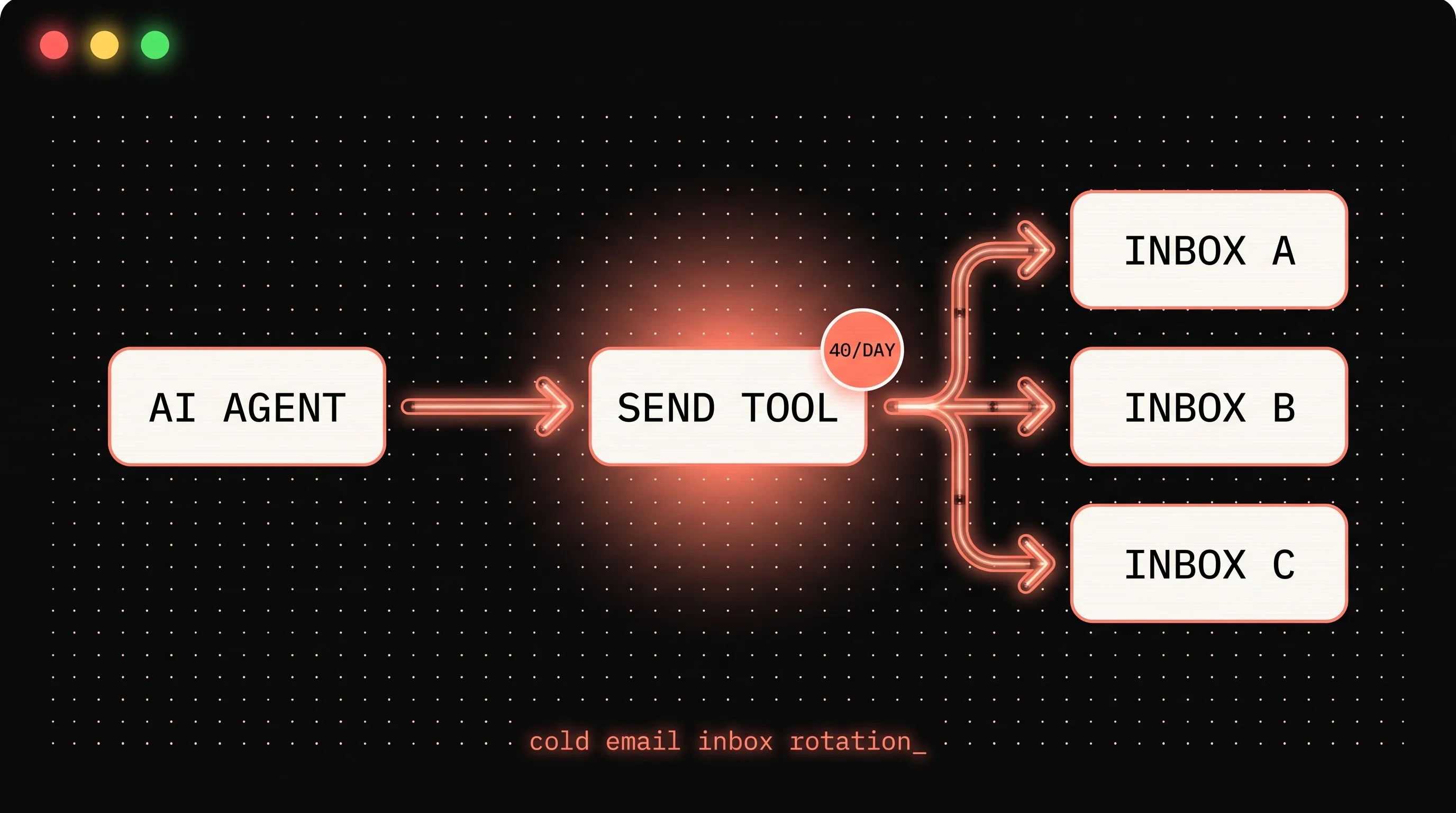
The practical architecture: a warmup service manages the ramp and pool engagement for each inbox; a monitoring integration pulls domain reputation and bounce rate metrics on a daily schedule; a threshold check blocks any inbox from receiving production traffic until it clears a defined reputation benchmark. The agent does not decide which inboxes are ready to send from - the infrastructure makes that determination and exposes only cleared inboxes to the agent. That separation is what prevents a warming inbox from accidentally receiving campaign traffic when a developer adds a new inbox mid-campaign.
What to monitor during warmup
Three metrics control whether warmup is progressing or failing.
Spam complaint rate. This is the most important. Google's guidelines set the hard ceiling at 0.30% and recommend staying below 0.10% to absorb spikes. A warmup inbox drawing complaints on synthetic engagement has a list quality or content problem that needs diagnosing before any production volume goes near it.
Bounce rate. Hard bounces above 2-3% indicate the list being used for warmup contains invalid addresses. For a warmup inbox this should be near-zero, because you control the destination addresses. If you see unexpected hard bounces, check your DKIM and SPF configuration - a misconfigured authentication record can cause delivery failures that surface as bounce codes that look like address problems.
Domain reputation score. Postmaster Tools provides a reputation indicator (bad, low, medium, high) that reflects your recent sending history. During warmup you want to see this move from low to medium to high over weeks two to five. If it drops, pause, investigate the last 24-48 hours of sends, and do not resume until you know why it dropped.
Checking these metrics manually every few days works during initial warmup when volume is low. Once an agent takes over, monitoring needs to be automated. The agent will send before you get a chance to check, and a domain that went from medium to bad overnight will have already processed thousands of sends by the time you notice it in the morning logs.
The handoff point: how you know warmup is done
Warmup ends and production begins when three conditions are met: domain reputation shows "high" in Postmaster Tools, DKIM authentication is passing on all sends, and the domain has maintained a spam complaint rate below 0.10% for at least two consecutive weeks.
The common mistake is treating warmup as a fixed duration rather than a fixed state. "Six weeks" is an estimate, not a guarantee. A domain that reaches week six with a "medium" reputation score has not finished warming - it needs more time regardless of the calendar. A domain that reaches week four with a strong reputation and zero complaints can be graduated early if the underlying metrics support it.
The production handoff should be reflected in your infrastructure: a flag or state on each inbox that controls whether the AI agent can queue sends through it, updated automatically when the domain clears the reputation benchmark. An agent that queries available inboxes and only receives production-cleared ones cannot accidentally use a warming inbox, regardless of what the campaign configuration says.
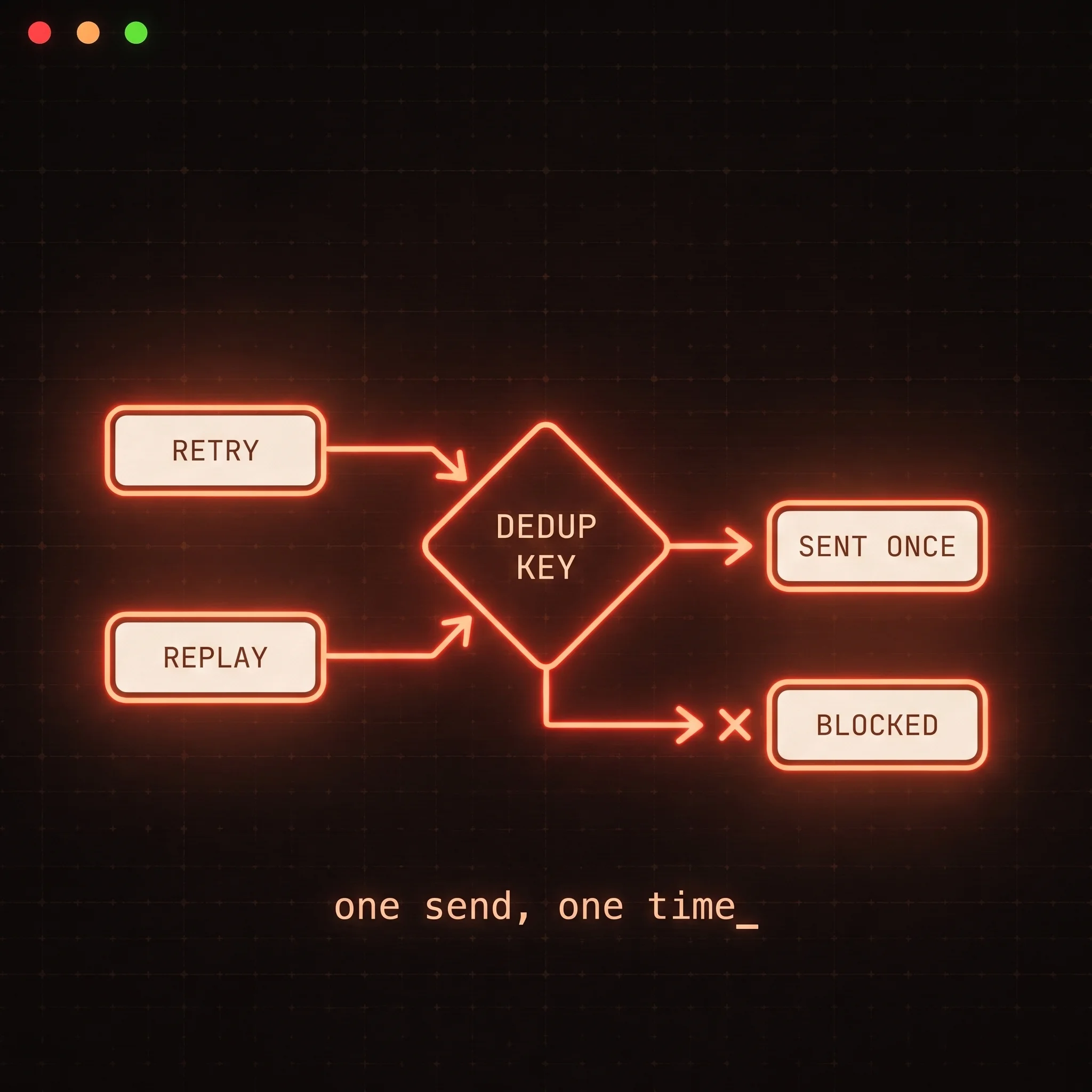
This is the key architectural difference between a warmup process that holds under autonomous sending and one that does not: the enforcement lives in the infrastructure, not in the agent's awareness that warmup is still ongoing. For the FoxReach MCP server, inbox state is tracked per inbox - a warming inbox is visible to the account but returns a structured error if an agent attempts to queue sends before it clears the production threshold. The warmup decision is not delegated to the model.
One concrete step before your next campaign
If you are wiring an AI agent to a cold email send layer for the first time, check the domain's current reputation before you queue a single send. Open Google Postmaster Tools, add your domain, and confirm what reputation state you are starting from.
A domain with no warmup history does not start at zero. It starts at "unknown," which mailbox providers treat as suspicious until proven otherwise. Two weeks of low-volume, high-engagement warmup before you hand off to the agent is the cheapest infrastructure investment you will make in an agent-native outbound stack.
The cold email infrastructure for AI agents at FoxReach enforces per-inbox rate limits and state checks at the tool call layer, so the send volume the agent can drive is bounded by what the infrastructure allows - not by what the agent decides. That design only works correctly if the inboxes behind it are warmed. The infrastructure handles the ceiling. Cold email warmup for AI agents is how you build the floor.