On paper, the math is not close. A fully loaded human SDR runs $103,000 to $159,000 a year. An AI SDR platform runs $15,000 to $30,000. By the same analysis, a human at $120,000 has to book about 12 qualified meetings a year just to break even, while an AI platform at $24,000 breaks even at 2.4. If AI SDR ROI were a spreadsheet question, you would have closed the tab and signed the contract already.
So why do so many teams that ran exactly that spreadsheet end up quietly disappointed a quarter later?
Because the spreadsheet measures the wrong thing. Almost every AI SDR ROI comparison you will read leads with cost per meeting, and cost per meeting is the number an AI SDR is designed to win. It is also the number that has the loosest connection to revenue. This post is about the gap between the metric that sells the tool and the metric that pays for it.
The number every vendor leads with
Cost per meeting is a genuinely good story for AI, and the numbers are real. One analysis puts AI-generated cost per lead at roughly $39 versus $262 for a human-generated lead, an 85% reduction, with the AI SDR payback period landing at 3.2 months against 8.7 for a human hire. Where a human touches a few dozen accounts a day, an agent works through hundreds with the same template quality.
None of that is marketing fiction. An agent does not sleep, does not ramp for three months, and does not get discouraged after twenty no-replies. If your bottleneck is the sheer number of first-touch emails that go out, an AI SDR removes it, and the cost per meeting on the resulting volume looks spectacular.
That is exactly why it is the wrong place to stop. Cost per meeting is the top of the funnel. Revenue is at the bottom. The distance between them is where AI SDR ROI is actually won or lost.
Why cost per meeting is the wrong number
A booked meeting is a promise, not a payment. Two things happen between the calendar invite and the closed deal, and both of them behave differently for AI-booked pipeline.
First, the prospect has to show up. A meeting booked off a high-volume, lightly-qualified sequence is a colder meeting than one a human earned through a real back-and-forth, and colder meetings no-show more often.
Second, the meetings that do happen have to convert. If the targeting was slightly off - the wrong persona, the wrong trigger, a company that will never buy - the meeting was cheap to book and worthless to hold. Volume makes this worse, not better, because an agent that is loosely targeted books more of exactly the meetings that do not convert.
The trap is subtle: the cheaper your meetings get, the easier it is to stop asking whether they are the right meetings. Low cost per meeting can be a sign of efficiency or a sign that you are filling the calendar with noise. The metric cannot tell you which.
None of this makes AI SDRs a bad bet. It makes cost per meeting a bad proxy. You have to push the calculation one stage further down the funnel.
The real ROI equation
Here is the number that actually decides AI SDR ROI:
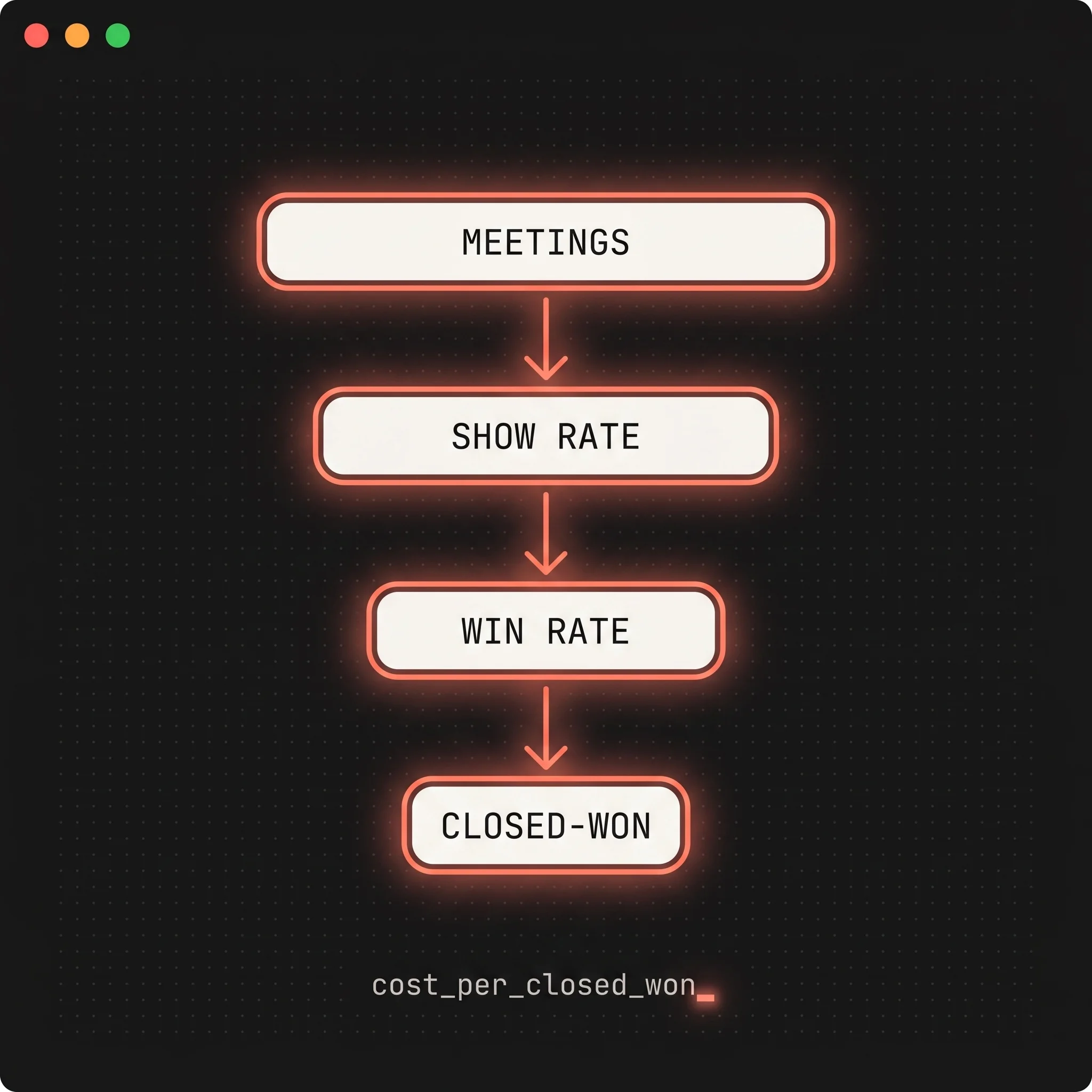
Cost per closed-won = cost per meeting / (show rate x win rate)
That one denominator is where the whole argument lives. A low cost per meeting divided by strong show and win rates is a fantastic business. The same low cost per meeting divided by weak show and win rates can lose to a human who books a third as many meetings.
Here is illustrative example math to make the mechanism concrete (these numbers are made up to show the shape, not measured):
| AI SDR | Human SDR | |
|---|---|---|
| Cost per meeting | $150 | $600 |
| Show rate | 55% | 80% |
| Win rate | 12% | 22% |
| Cost per closed-won | $2,273 | $3,409 |
In that example the AI still wins, but notice how much of its four-to-one edge on cost per meeting evaporates by the time you reach closed-won. Nudge the AI win rate down a couple of points, or the human's targeting up, and the ranking flips. The lever that decides the outcome is not the price of the tool. It is meeting quality.
This is why the loudest reported wins for AI SDRs come with an asterisk. When Sendoso reported a 20% reply rate and 47 opportunities in 30 days, the story was not "we bought an AI SDR." It was "we pointed a high-volume tool at a well-defined audience with real data behind it." The tool multiplied a good targeting decision. Pointed at a bad one, it would have multiplied that instead.
What actually moves the equation
If meeting quality is the lever, then AI SDR ROI is mostly a function of three things the vendor comparison never mentions:
- Data quality. An agent is only as good as the list and the signals it works from. Garbage targeting scales into garbage meetings at machine speed. The cheapest way to raise cost per closed-won is to feed the agent a cleaner, better-triggered audience.
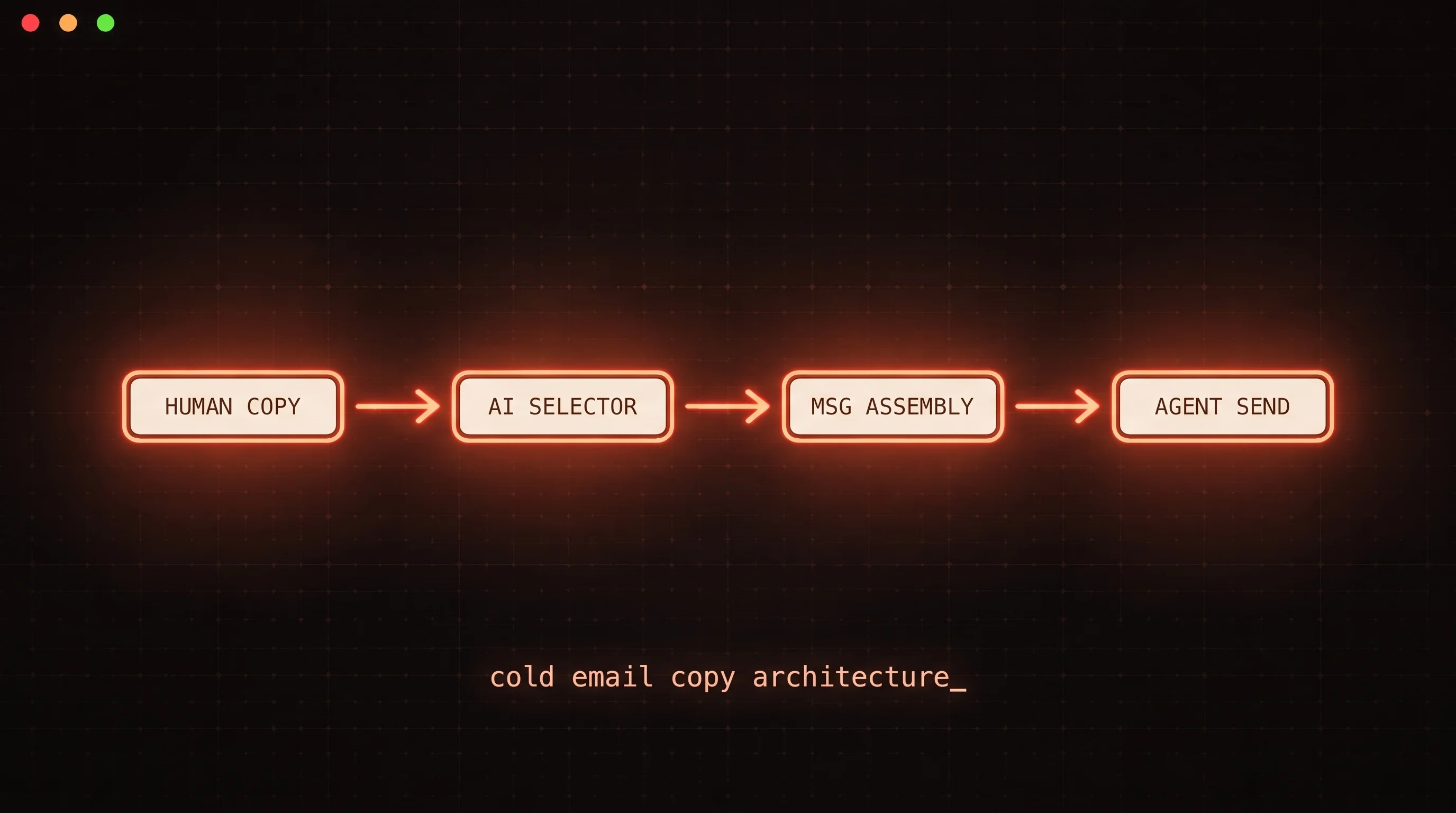
- Where the human sits. The parts of the funnel that convert - the live conversation, the objection, the multi-stakeholder deal - are still human work. The teams getting real returns are not replacing the SDR; they are letting the agent own research, personalization, and first touch, and keeping a person on the conversation. If you want the pattern in detail, we wrote it up in keeping a human in the loop on cold email.
- Whether you can see the funnel at all. You cannot optimize cost per closed-won if your tool only reports meetings booked. Owning the data past the meeting is the difference between managing ROI and hoping for it.
Put differently: the agent is a volume and cost lever. Quality and conversion are human and data levers. AI SDR ROI is the product of both, and a tool that optimizes only the first one will always look better in the demo than in the quarterly review. If you are still deciding what the role even is, what an AI SDR actually is is the cleaner starting point.
The pricing question underneath
There is a second reason the standard ROI math misleads: it treats the AI SDR as a fixed product with a fixed price, when the biggest variable in the equation is how you buy it.
A fully managed AI SDR sold as a headcount replacement is often priced like one - a few thousand dollars a month for a black box you cannot inspect, tune, or point at the quality lever that decides your ROI. You are paying replacement prices for a tool you do not control, which is the worst of both worlds when the numbers underperform.
The alternative is to treat outreach as infrastructure your own agent drives, so the cost collapses to what you actually consume. Model inference is now a metered line item, not a salary - even at premium Claude model API rates, the token cost of drafting and triaging a first-touch sequence is cents per lead as an illustration, not thousands per month. When you own the stack, you can fix the targeting, wire in your own data, and keep a human on the conversations that close, instead of hoping a vendor's defaults happen to fit your funnel.
That is the model we build for at FoxReach: the sending, deliverability, and reply infrastructure exposed as tools your agent calls, described in cold email built for AI agents, priced so the ROI math works in your favor rather than the vendor's - you can see the numbers on the FoxReach pricing page. If you want to see what owning the loop looks like end to end, how to build an AI SDR walks through the stack.
The one rule that decides it
If you take one thing from this: never approve an AI SDR on cost per meeting - approve it only when the cost per closed-won deal, calculated on your own funnel with a human on the conversations, still beats your next best use of the money.