
Instantly's 2026 cold email benchmark - drawn from campaigns running on warmed, authenticated infrastructure across their user base - puts the average reply rate at 3.43%. The top 10% of senders on that same infrastructure hit 10.7% or higher. The benchmark attributes the difference to micro-segmentation, problem-focused messaging, and hyper-relevant targeting. In practice, those three phrases describe one thing: the sender knew something true and current about the recipient before sending.
The cold email personalization AI agents produce is only as strong as the data behind it. Most of what gets called AI personalization does not meet that bar.
What passes for personalization
The common pattern looks like this: ingest a prospect list, pull each contact's LinkedIn profile or company website, feed that to a language model, generate a one-line icebreaker, swap it into the first sentence of a template. The template body is unchanged. The icebreaker says something like "I saw your recent post on scaling a sales team" or "I noticed you expanded to three new markets last year." The rest of the email is the same for every contact.
When a reply comes in referencing the icebreaker positively, it almost never does - because the signal is generic and the template underneath it has not changed. The icebreaker is personalized; the email is not. The reply rate reflects that distinction.
The teams hitting 10.7%+ in that benchmark are not doing something different with the icebreaker. They are sourcing different signals entirely: a funding announcement from last week, not a LinkedIn post from last month. A job opening for the exact role that signals a pain point you solve. A product launch or a leadership change that creates a window you can reference with specific context. The signal has to be current, specific, and connected to the actual body of the email.
That kind of signal sourcing is an enrichment problem, not a copywriting problem.
The enrichment gap
Clay's waterfall enrichment documentation puts single-provider coverage at roughly 30% of a prospect list for verified mobile numbers and direct email addresses. In a test comparing ZoomInfo to a multi-provider waterfall on 1,000 contacts, ZoomInfo covered around 300; the waterfall reached around 800. A waterfall approach, querying five or more providers sequentially and paying only when a provider matches, raises that to 80% or higher.
The coverage gap matters differently depending on who is doing the sending. For a human SDR, a null enrichment result on 70% of a list means manual research on a subset of high-priority contacts - a deliberate step. For an AI agent, it means 70% of your prospect list returns null from your enrichment tool, and whatever the agent does with that null result is what gets sent to the majority of your contacts.
Most AI SDR implementations do not have an explicit answer to that question. The agent is prompted to personalize based on available data. When available data is empty, the model improvises. It might generate generic copy. It might hallucinate a signal that was not in the data. It might skip the contact silently. Which behavior you get is not specified in the infrastructure; it is a consequence of how that particular model run interpreted an underdefined instruction.
Where personalization logic belongs
The reliable architecture puts personalization logic in tool calls, not in the prompt.
The prompt-based pattern passes enrichment data directly to the language model and asks it to write a personalized email. The model does this well when enrichment data is present. When it is absent, the model is deciding what to do - and in an AI agent stack, a model making decisions about how to handle null states in irreversible actions (sends already delivered cannot be retracted) is not the right layer for that decision.
The tool-based pattern separates the stages. The agent calls an enrichment tool with a structured input (prospect email or domain) and receives structured output: a defined set of data fields, or an explicit null/fallback state when enrichment fails. It then calls a personalization tool with that structured output as the input, which returns a structured first-line draft or a defined fallback copy path. The agent assembles the email from the structured components and calls the send tool.
When enrichment returns null, the enrichment tool returns a structured fallback signal - not an empty field the model has to interpret, but an explicit state that downstream tools recognize. The personalization tool sees that state and executes a defined fallback: persona-level copy, a different signal type, or a skip flag that routes the contact out of the current campaign for secondary enrichment. The agent does not make that decision. The tool enforces it.
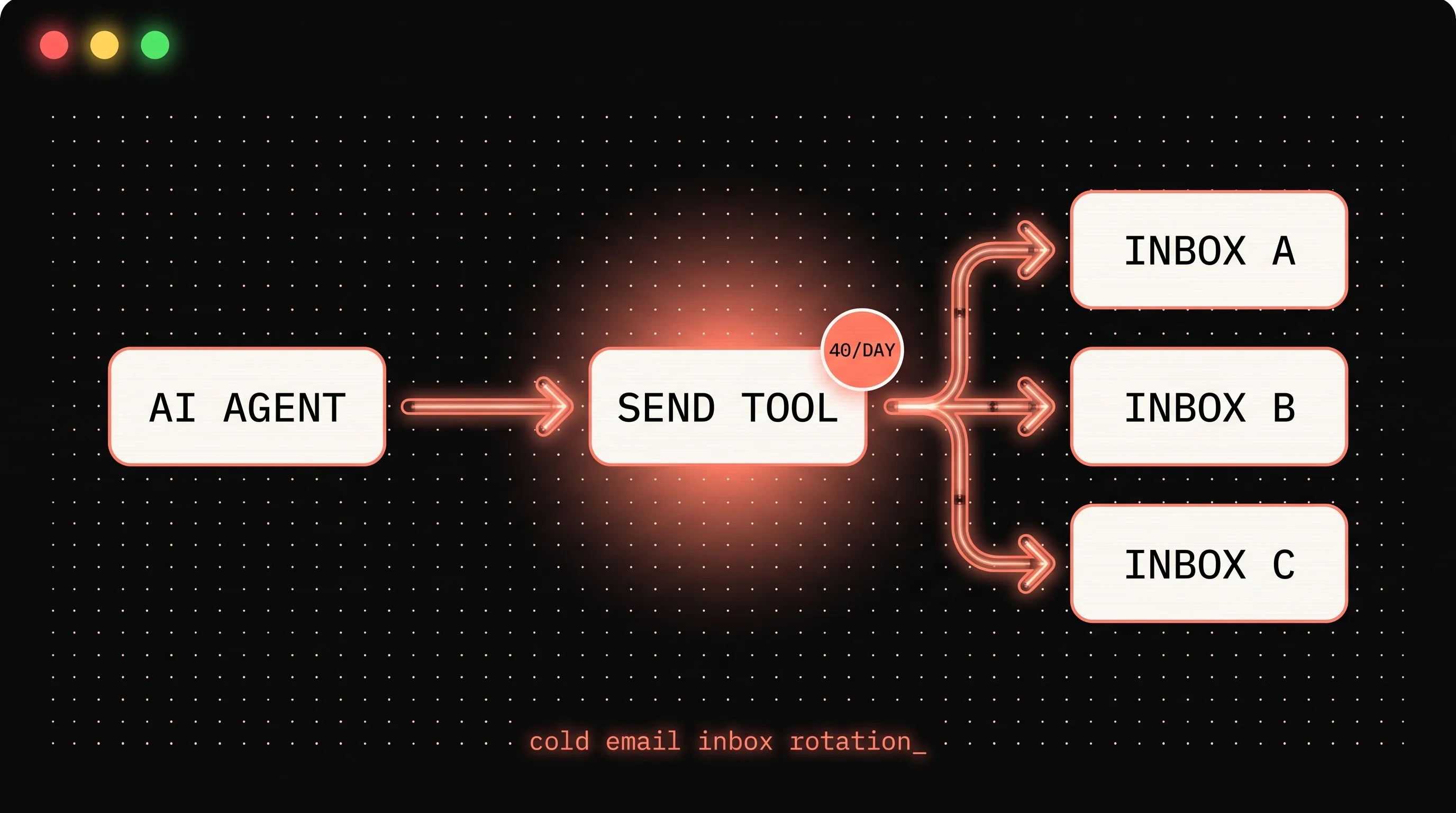
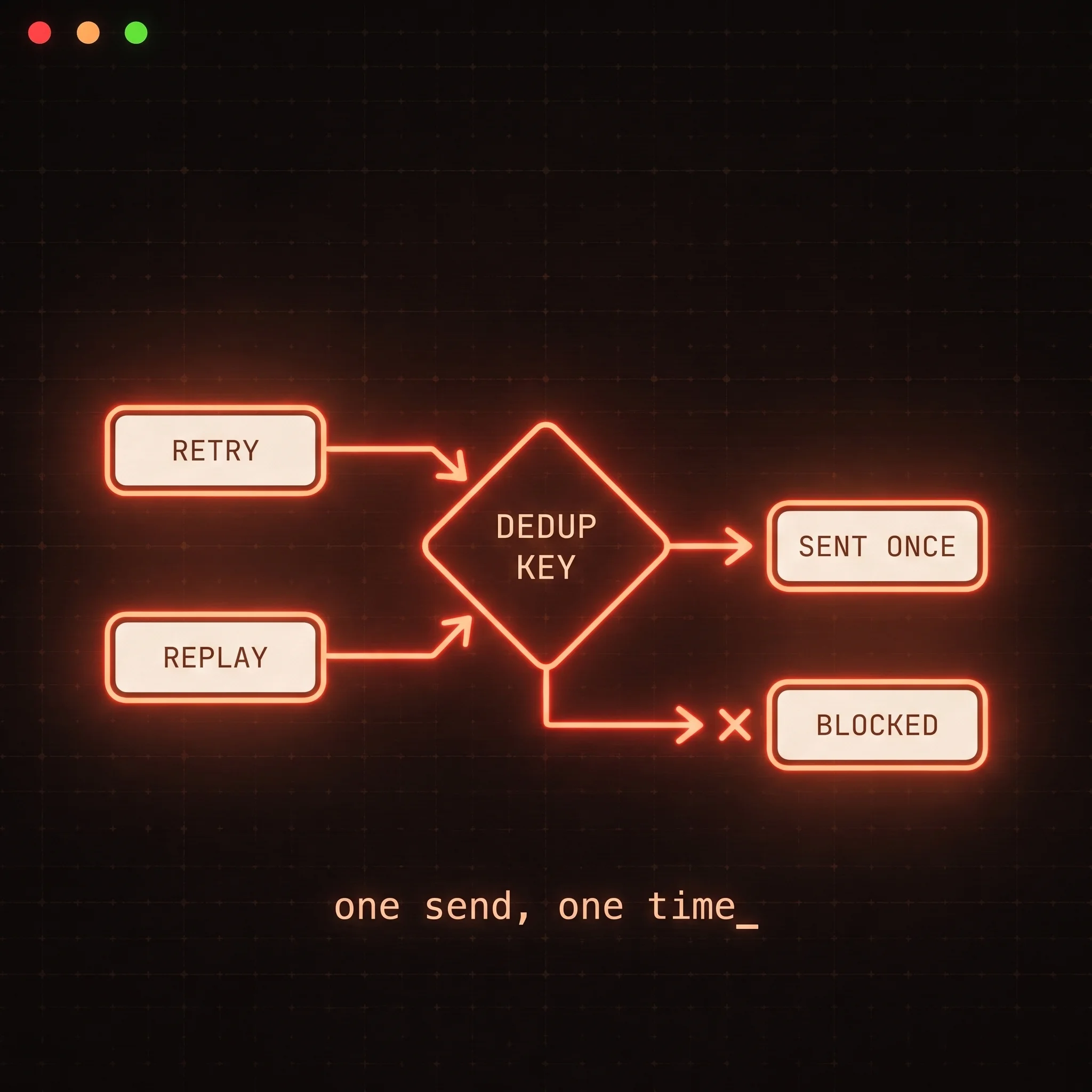
This is the same principle at work in preventing duplicate cold emails and enforcing inbox rotation limits: constraints on irreversible sends belong in the tool layer, where they hold regardless of what the model decided upstream.
Designing the fallback
When enrichment returns null on a contact, four paths exist.
Skip the contact. The agent marks the contact as pending enrichment and removes it from the current send batch. This avoids sending a weak email but assumes the contact is recoverable in a future run with better data. Contacts that are permanently outside enrichment databases are never reached.
Send persona-level copy. Rather than a contact-specific signal, the email references signals that apply to the prospect's archetype: their industry, company size, known tech stack, or ICP profile. This is weaker than signal-based personalization but stronger than a bare template. It is also the right default for the segment of contacts that will never have individual enrichment data.
Trigger secondary enrichment. The waterfall model applies not just to contact data but to signal types. If a recent news lookup returns null, try a tech stack lookup. If a job opening search returns nothing, try a funding data source. The agent escalates through a defined sequence of enrichment tools rather than stopping at the first null.
Defer to a human queue. For high-value accounts where none of the enrichment paths return useful data, route the contact to a review queue. A human can research the account and approve or write the first-line manually. Building an AI SDR that handles routine contacts autonomously while surfacing edge cases for human attention is a more practical architecture than assuming full automation across the entire list.
The default should be persona-level fallback plus secondary enrichment for contacts that matter. Skip is rarely the right answer.
Token efficiency at volume
At 500 sends per day, cold email personalization for AI agents means 500 enrichment lookups and 500 generation calls. If each generation call includes 600 tokens of raw enrichment context - LinkedIn snippets, company descriptions, news summaries - that is 300,000 input tokens daily for personalization alone, before counting the email body generation.
Two patterns keep this manageable.
Separate enrichment from generation. Run the enrichment pipeline as a pre-processing step before the agent loop starts. Cache the results in a structured format - a labeled record with company size, the selected signal, hiring indicators, and tech stack. Structured records are shorter than narrative summaries of the same data and tend to produce more consistent first-line outputs because the model reads labeled fields rather than parsing prose. The exact token savings depend on model and cache behavior, but structured inputs typically run significantly shorter than equivalent narrative context.
Batch enrichment calls. Enrichment APIs support batch lookup - one call for a list of prospects rather than one per contact. Processing 100 contacts in a batch before the agent loop starts costs far less in latency than 100 sequential per-contact calls inside the loop. Building an AI SDR at any meaningful volume requires this pattern; per-contact round-trips inside the loop are the fastest way to make a 500-contact campaign slow before it becomes expensive.
What a working pipeline looks like
The architecture that separates 3.4% from 10.7% is not a better prompt. It is a defined pipeline with explicit handling at each stage.
Stage 1 - Enrichment. A batch enrichment call against a waterfall of 5+ providers. Each contact returns structured data or an explicit fallback state. No contact reaches the personalization stage without a defined enrichment outcome.
Stage 2 - Signal selection. A tool or scoring rule selects the strongest available signal from the enrichment output. The scoring logic typically prioritizes by recency (events from the last 30 days over older data) and specificity (job opening for the role you solve > company description > industry tag). A funding announcement from last week outranks a LinkedIn post from last month. The selection is hardcoded in the pipeline, not inferred by the model from a prompt instruction.
Stage 3 - First-line generation. A tool call takes the selected signal and returns a structured draft. Length, tone, and factual scope are enforced at the tool level. Contacts with only persona-level data receive persona-level copy; the generation step is not asked to invent a signal that was not there.
Stage 4 - Assembly and send. The email is assembled from structured components and passed to the cold email MCP server, which enforces per-contact timing, inbox rotation, and duplicate prevention before the message goes out. The personalization quality is already determined by the enrichment stage. The send layer does not revisit that decision.
Key takeaways
- The reply rate gap between average and elite cold email campaigns - 3.43% versus 10.7% - is explained by signal quality, not copy quality.
- Single-source enrichment covers roughly 30% of a prospect list. Waterfall enrichment with 5+ providers reaches 80%+ and gives AI agents real data to work with on the majority of contacts.
- Personalization logic belongs in structured tool calls, not in prompt instructions. When enrichment fails, a tool enforces a defined fallback; a prompt relies on the model deciding correctly in that run.
- The fallback state for null enrichment is a first-class design decision, not an edge case. Skipping contacts with no data, sending persona-level copy, or routing to a secondary enrichment path are all valid choices - but the choice has to be specified before the agent runs, not inferred at send time.
- Separate enrichment from generation and batch enrichment calls before the agent loop. Structured 200-token records outperform 600-token narrative summaries for personalization at a fraction of the token cost.